Some interesting documents that don't fit in elsewhere on this site.
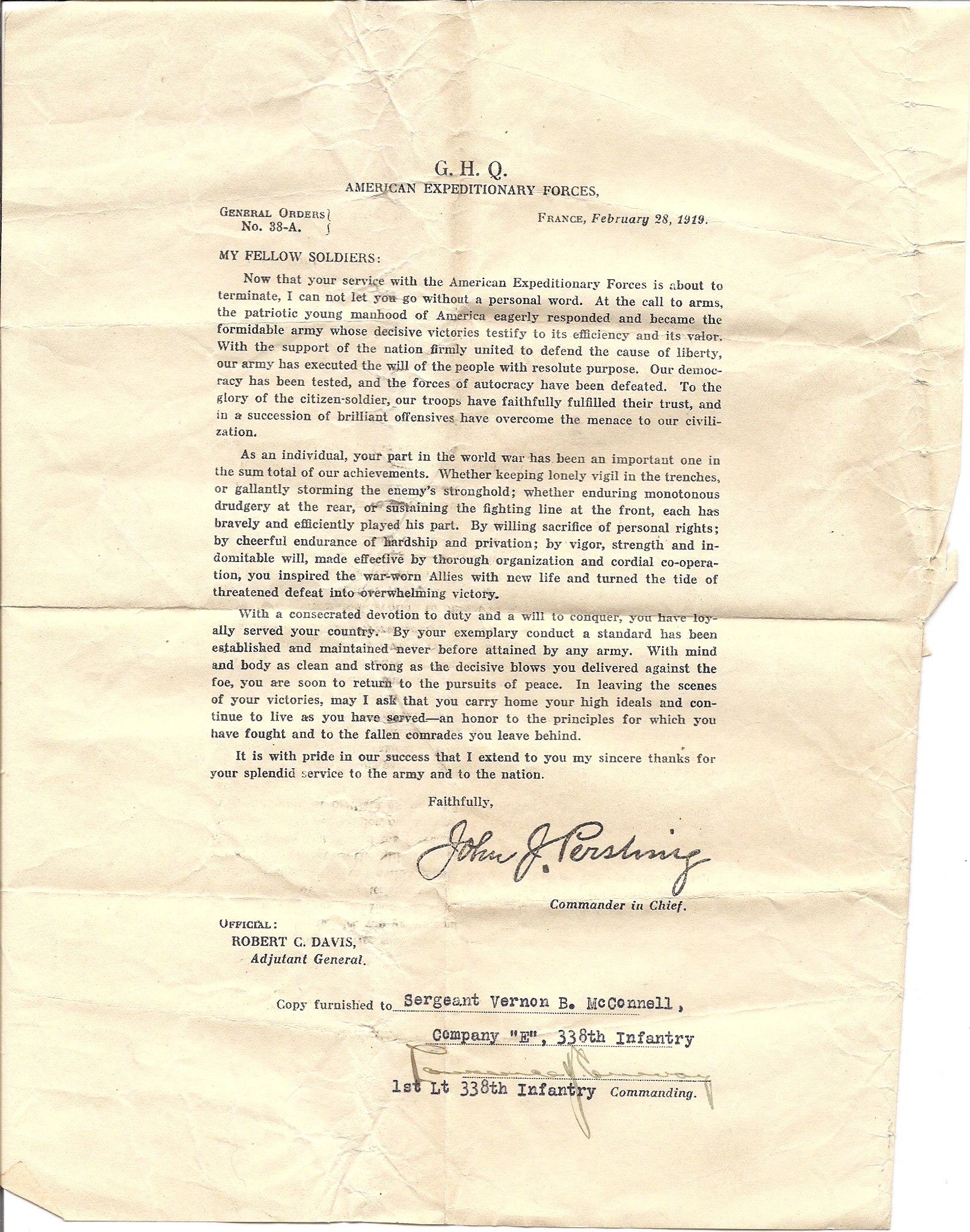
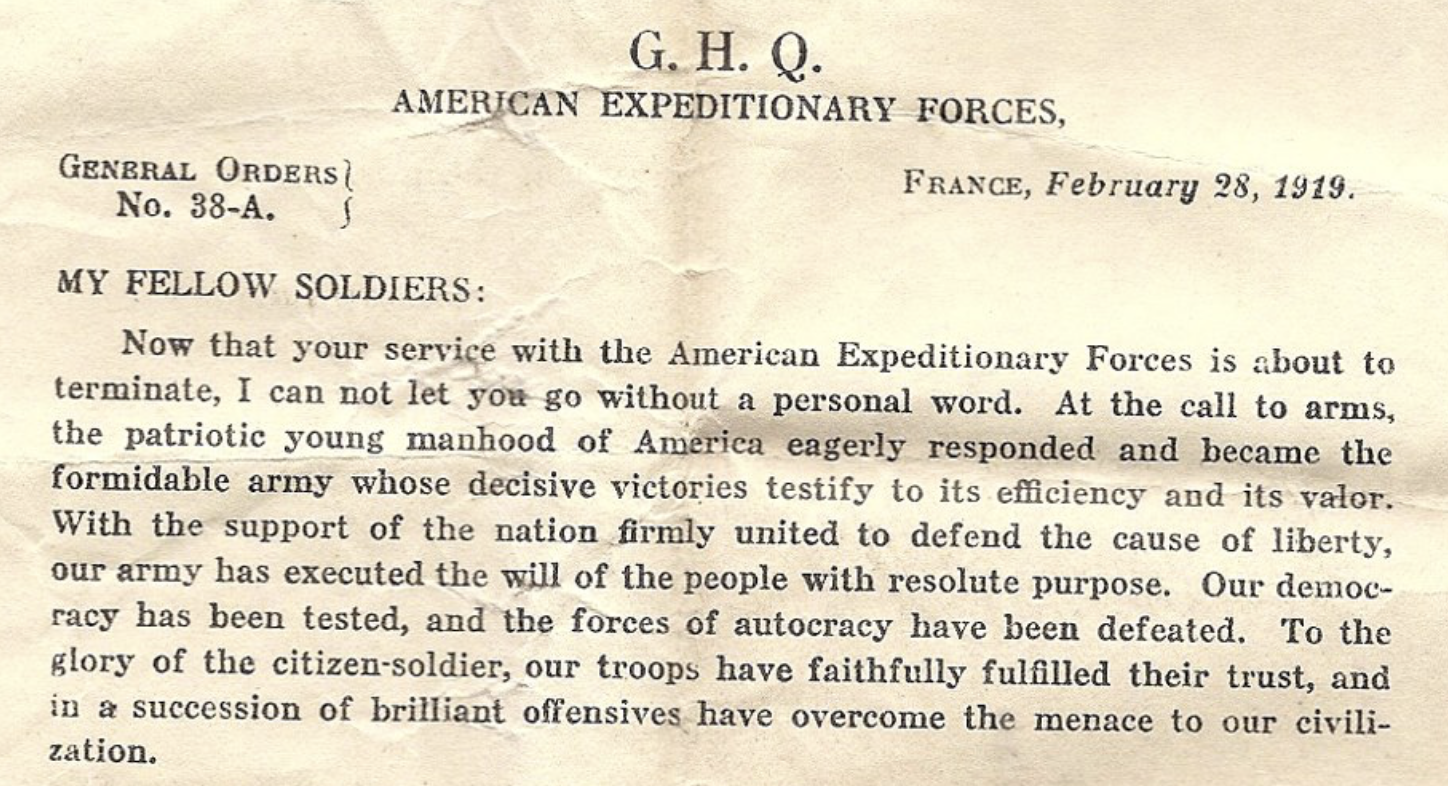
A farewell to arms letter from General Pershing to the men of the WW1 American Expeditionary Forces at the conclusion of the war. This letter belonged to my wife's grandfather.
Order of Battle of the United States Land Forces in the World War, Vol. 2. This documents the commanders, composition, and movements of US Army forces during WW1. Originally published in 1931, which explains the, singular refererence to "world war". My wife's grandfather was in Company E, 338th Infantry, part of the 169th Infantry Brigade, 85th Division. The movement of his unit is covered starting on page 373. This document was republished in 1988.
Blueprint of the WW1 German U-Boat Tauchschiff. A large and advanced submarine, but none were built before the end of the war.
A series booklets titled Combat Lessons, a series of WW2 War Department publications to provide lessons learned about combat in WW2. The documents cover
subjects from principals of leadership, to avoiding trench foot.
A study of the use of US weapons and equipment by infantry in the Korean War This was produced through interviews of US soldiers after their time in combat in Korea, and was meant to help determine the usefulness of different items of equipment. The most interesting part to me was about the amount of aimed vs un-aimed rifle fire in combat.
Battle maps and list of ships from the Battle off Samar, a major component of the Battle of Leyte Gulf. This battle featured the heroic stand of small US escort carriers and destroyers against a much larger Japanese fleet.
General Dwight D. Eisenhower's message to the troops prior to the Normandy D-Day landings.
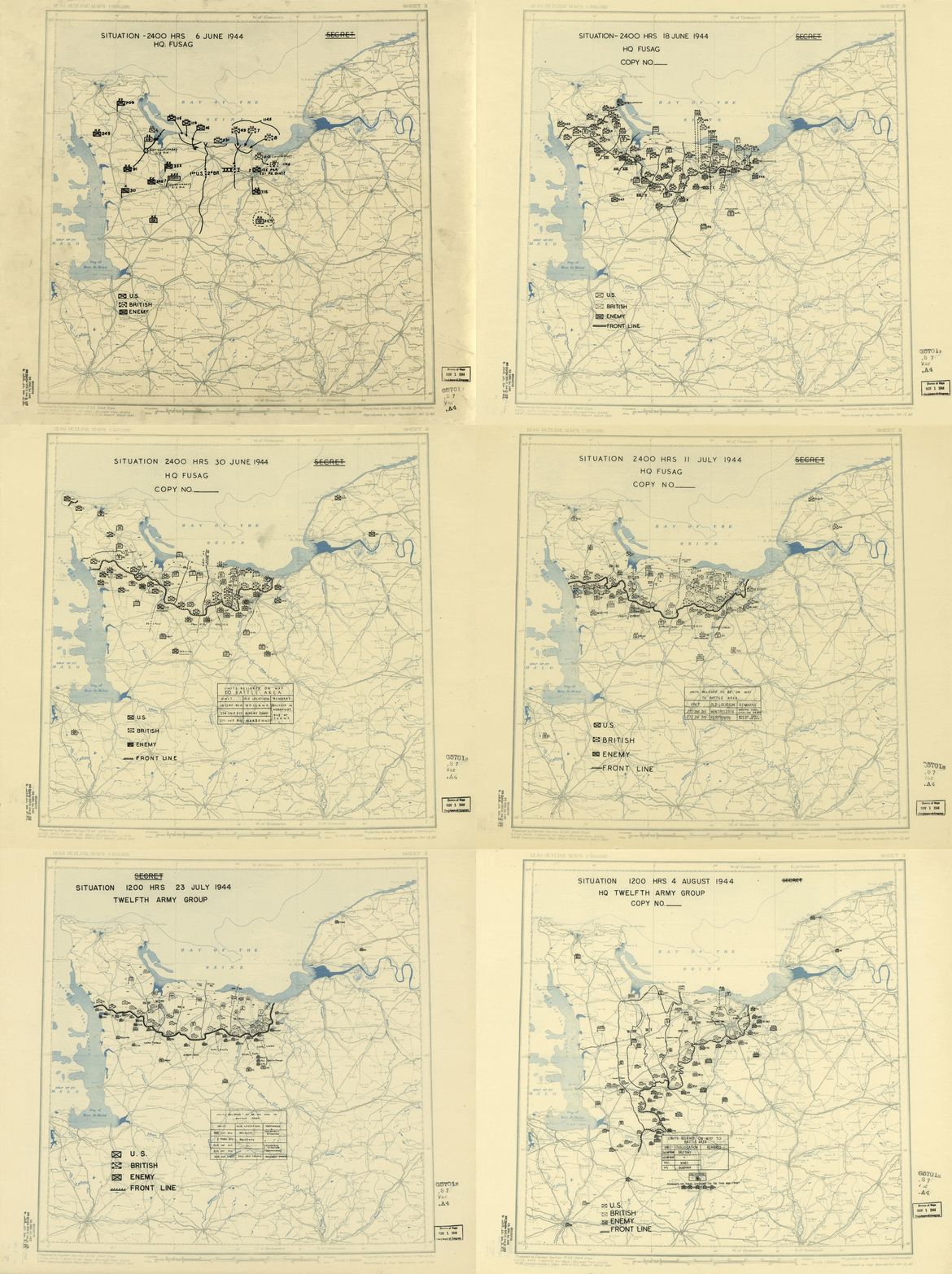
Original Military Situation Maps
Animated Normandy Map. Original WW2 situation maps of the Normandy landing from June 6, 1944 to August 4, 1944.
Some noteworthy things to watch is the early consolidation of the beachheads, the shrinking German pocket in the Cotentin Peninsula in the north west corner of the map, and the sudden accelleration of the advance starting around June 26.
Animated Battle of the Bulge Map. Original WW2 situation maps of the German Ardennes Offensive, aka Battle of the Bulge Dec 15 1944 - Feb 16, 1945
Points of interest include the fact that the US was unaware of the presence of the German units prior to the attack. You can see when Bastogne becomes completely cutoff on Dec 25 and 26, and the resupply corridor is opened on December 27. The high point of the German advance around January 1st, and by the second week of February, the front lines are essentially in the same place as they started on Dec 15th.